The situationist polytopes are sound and light sculptures made using 30-note music boxes, bike lights, cardboard cylinders and music box tablature assembled as a loop. They are played by the public by cranking the handle of the music box. Each polytope uses a different score made as a transcription of the Arts Tower illumination at night. Some of the music boxes used in the polytopes had been (partly) muted by sticking paper and/or bluetack onto their metal lamellae.
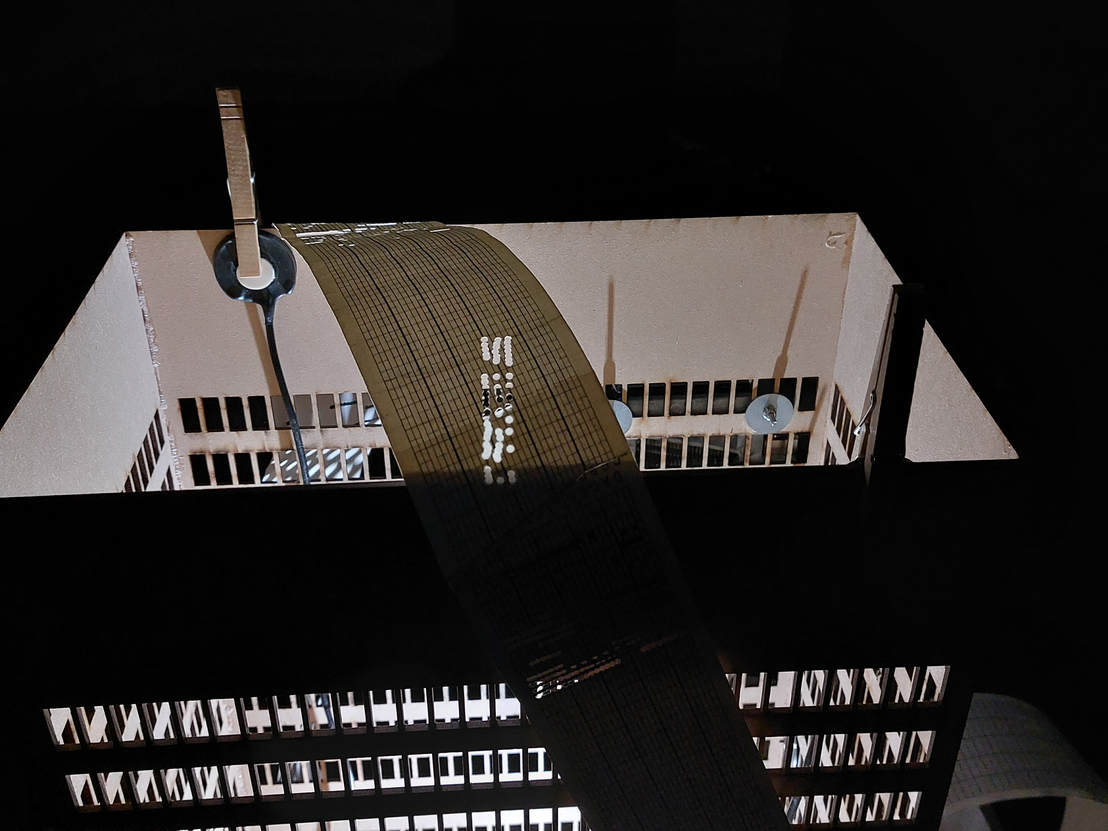
A 1:100 scale model of the Arts Tower is prepared with four 30-note music boxes bolted to its facades. Two contact mics, and a transducer speaker are stuck to the interior of the walls. Audio picked up from the contact microphones is processed using FFT freeze (triggered by a gate switch) and sent to the transducer speaker to create a system with feedback potential. The physical structure of the scale model fuctions both as the resonator for the music boxes, amplified sound source and resonant amplifier.
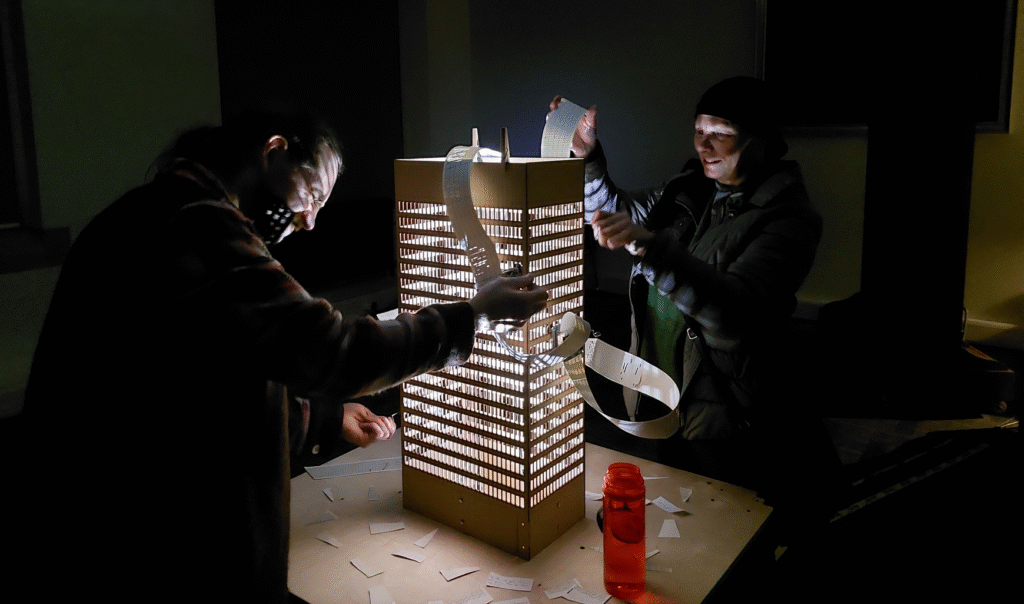
A long loop of music box tablature made of many transcriptions of the Arts Tower illumination is threaded through the four music boxes to create a ribbon that surrounds the building.
The audience surrounds the scale model and, cranking the music boxes, activates the assemblage, inducing electroacoustic feedback. If the model is not operated, the feedback eventually disappears, slowly decaying.